
Operation Highjump, officially known as The United States Navy Antarctic Development Program, was a large-scale military mission undertaken by the United States in the aftermath of World War II. Conducted between December 1946 and February 1947, it is one of the most fascinating and controversial events in U.S. military history, mainly due to its enigmatic nature and the numerous conspiracy theories that have since emerged.
The Official Purpose of Operation Highjump
The stated mission of Operation Highjump was to conduct a variety of scientific, military, and logistical operations in Antarctica. The operation was led by Admiral Richard E. Byrd, a renowned polar explorer, and consisted of 4,700 men, 13 ships, and 23 aircraft, including 2 destroyers, a submarine and the aircraft carrier Philippine Sea. It was one of the largest and most ambitious expeditions to the southernmost continent at the time, showcasing the United States’ desire to assert its presence and capabilities in the newly geopolitically significant polar region.
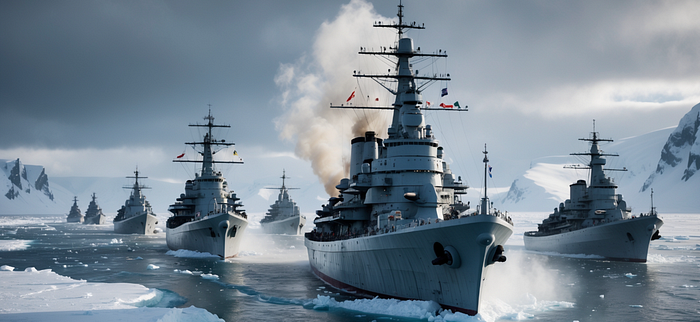 The official purposes of Operation Highjump were outlined as follows:
- Training personnel and testing equipment in extreme cold weather conditions: Given the harsh, frigid conditions of Antarctica, the operation served as a testbed for new technologies and training exercises to prepare military personnel for the potential challenges posed by Arctic and Antarctic environments. The expedition also aimed to evaluate new survival techniques and the logistics of operating in a remote and inhospitable region.
- Conducting scientific research: The mission involved extensive scientific research, including geological and meteorological surveys of the Antarctic continent. The U.S. Navy was interested in mapping out unexplored parts of the landmass and obtaining crucial data on the region’s climate, topography, and resources. Scientists and military personnel were tasked with gathering valuable knowledge to support future research and expeditions in the area.
- Establishing a U.S. presence in Antarctica: The operation was part of a broader strategy to assert U.S. dominance and establish a foothold in Antarctica during the early stages of the Cold War. In the years following World War II, geopolitical rivalries were intensifying, and control over polar regions was becoming increasingly important. While Antarctica was governed by the Antarctic Treaty (signed in 1959), at the time, various nations were competing for influence in the area. By launching Operation Highjump, the United States sought to stake its claim.
- Testing military readiness and capabilities: Operation Highjump provided an opportunity for the U.S. military to evaluate its readiness for a wide range of operations in an extreme and unfamiliar environment. It involved the testing of new technologies such as icebreakers, aircraft, and specialized equipment, as well as the military’s ability to coordinate large-scale operations in remote areas.

The Conspiracy Theories Surrounding Operation Highjump
While the official narrative of Operation Highjump has remained consistent, it has been the subject of numerous conspiracy theories, many of which question the true intentions behind the mission. These theories have attracted significant attention and speculation over the years, ranging from UFOs to secret Nazi bases, and some of these claims continue to intrigue researchers and enthusiasts alike. Below are some of the most well-known conspiracy theories related to the operation:
1. The Secret Nazi Base Theory
One of the most persistent conspiracy theories surrounding Operation Highjump suggests that the expedition was not merely a military exercise, but rather a mission to investigate and eliminate a hidden Nazi base in Antarctica. This theory traces back to rumors that Nazi scientists and military leaders, including high-ranking members of the Third Reich, had fled to Antarctica at the end of World War II and established a secret base.
The theory is based on the idea that Nazi Germany had been working on advanced technology before and during the war, including flying saucers (or UFOs), which they allegedly tested in secret bases in the Antarctic region. Proponents of this theory argue that the U.S. military’s interest in Antarctica was not solely focused on scientific research, but was driven by the need to investigate the potential presence of these advanced Nazi technologies, which could pose a threat to global security.
Some speculators point to the New Schwabenland region of Antarctica, which Nazi Germany claimed in 1938, as a potential location for this hidden base. Furthermore, Admiral Byrd’s reported comments after the mission regarding the potential threat of “flying objects” and his strange references to encounters with advanced technology have fueled these claims.
2. UFOs and Extraterrestrial Involvement
Another theory that has gained traction is that Operation Highjump’s purpose was to investigate UFOs or extraterrestrial activity in Antarctica. According to this theory, Byrd and his crew encountered unidentified flying objects during their mission and were tasked with investigating their origins.
The most famous incident associated with this theory is the claim that Admiral Byrd’s aircraft were intercepted by flying saucers during the operation. Allegedly, Byrd and his crew were forced to return after their planes were engaged by these advanced craft, which some believe were of extraterrestrial origin. The mysterious nature of these encounters, along with Byrd’s purported statements about “advanced flying machines,” has fueled speculations about an extraterrestrial presence in Antarctica, with some suggesting that the area could be a secret base for alien activity.

This theory is largely based on unverified accounts and hearsay. However, the idea of extraterrestrial presence in Antarctica continues to capture the public’s imagination, especially in the context of UFO sightings and military secrecy.
3. The “Cover-Up” and the Real Purpose
Some conspiracy theorists assert that the true purpose of Operation Highjump was far more clandestine than the official mission statement suggests. According to this theory, the operation was primarily focused on investigating hidden advanced technologies left behind by the Nazis or extraterrestrial forces, which the U.S. government has sought to conceal from the public.
Proponents of this theory argue that there is a deliberate cover-up surrounding the events of Operation Highjump, with the U.S. government suppressing information related to the discovery of these technologies. The theory suggests that Operation Highjump was not simply a military exercise or scientific mission, but rather a covert operation aimed at controlling or neutralizing unknown threats in the Antarctic region.
Some theorists also speculate that Byrd’s abrupt departure from the mission in early 1947, which was officially attributed to the harsh conditions and the completion of the original objectives, was actually a result of a failed attempt to confront whatever they encountered in the area — whether that be Nazis, extraterrestrials, or some other unidentified entity.

The Legacy and Mystery of Operation Highjump
Despite the conspiracy theories, Operation Highjump officially ended without any major incidents or the discovery of extraordinary phenomena. The U.S. Navy returned to the United States, and the mission largely faded into history. However, the secrecy surrounding the operation, coupled with the enigmatic nature of Antarctica itself, has kept the mystery alive for decades.
The Antarctic Treaty of 1959, which designated Antarctica as a region dedicated to peaceful scientific exploration and prohibited military activities, only heightened the intrigue. The idea that Operation Highjump might have been an early stage in the military-industrial complex’s interest in Antarctica — whether for geopolitical, scientific, or covert reasons — remains a subject of speculation.
Today, Operation Highjump continues to be a popular topic among UFO enthusiasts, conspiracy theorists, and researchers of the unknown. Whether the theories surrounding the operation are grounded in fact or are merely the product of imagination, the allure of Operation Highjump remains undeniable, and it is likely to continue to be the subject of debate and mystery for years to come.


No comments:
Post a Comment